
Types of Wedding Bouquets: Every Shape and Style Explained
●
●
●
Your bouquet is one of the first things people notice when you walk down the aisle and it shows up in nearly every key photograph of your day. Getting the shape and style right matters just as much as the flowers themselves.
The good news is that once you understand the different types of bridal bouquets and what suits different gowns, venues, and aesthetics, the decision becomes much easier. This guide covers every major wedding bouquet shape and style, along with practical advice on how to choose the right one for you.
Why Bouquet Shape Matters
Before diving into the different styles of bouquets, it helps to understand what shape actually does. The silhouette of your bouquet affects proportion — a small posy can look lost against a voluminous ballgown, while an oversized arrangement can overwhelm a sleek, minimal dress. Shape also sets a mood. A tightly structured round bouquet reads formal and polished. A loose, garden-style arrangement feels relaxed and natural. A dramatic cascade signals glamour.
The starting point for every bouquet decision should be your dress, your venue, and the overall feeling you want your wedding to have.
The Most Popular Types of Wedding Bouquets
Round Bouquet
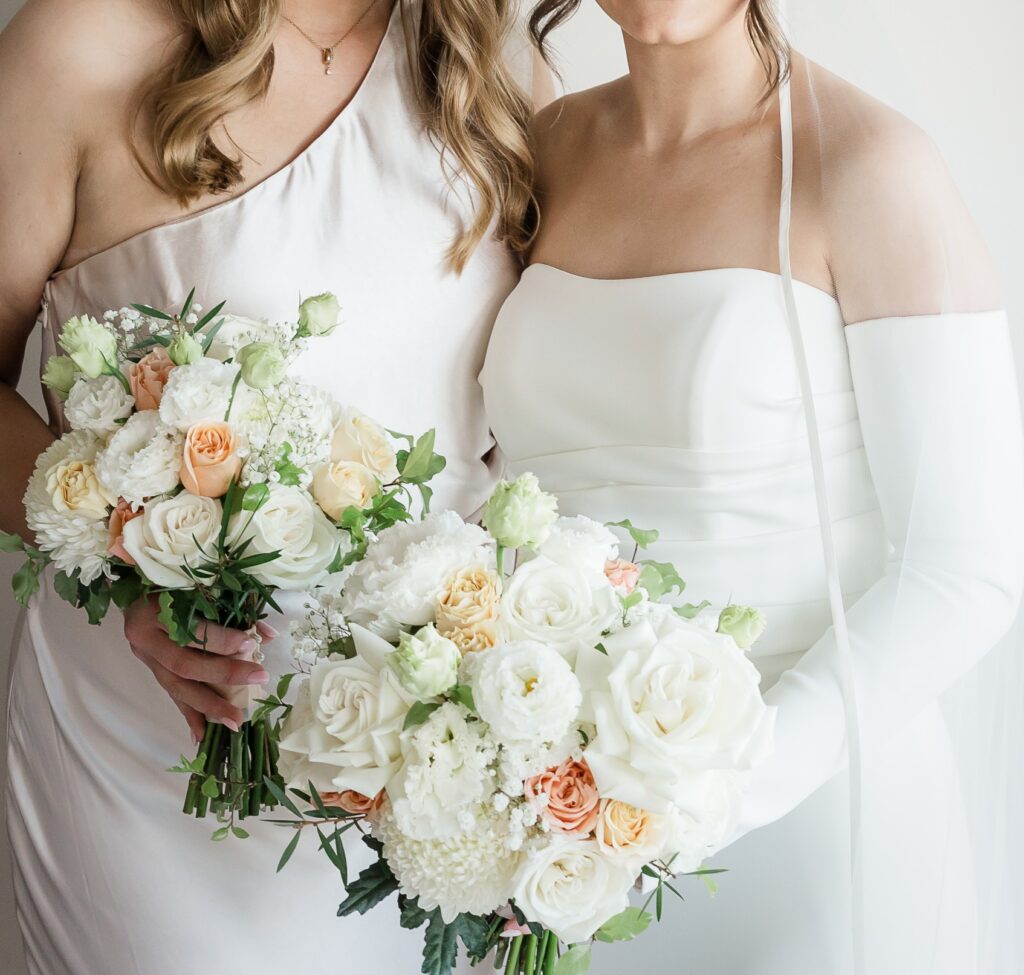
The round bouquet is the most classic and widely chosen of all bridal bouquets shapes. Flowers are arranged in a tight, even dome, symmetrical from every angle, with all blooms sitting at an even height and minimal greenery so the shape stays clean and defined.
It is a versatile style that suits formal, contemporary, and traditional weddings equally well. In recent years, brides have given the round bouquet a modern update by choosing a single flower variety in a monochromatic palette, all white garden roses, or all blush ranunculus which creates a refined, sculptural effect.
Best for: Structured gowns, formal venues, classic aesthetics.
Best flowers: Roses, peonies, ranunculus, garden roses, dahlias.
Posy Bouquet
A posy is essentially a smaller, more compact version of the round bouquet hand-held and typically between 20 and 25 centimetres in diameter. It is one of the most practical bridal bouquet styles because it is lightweight, easy to carry, and does not compete with the dress.
Posies are a popular choice for bridesmaids but many brides choose them too, particularly for relaxed, intimate ceremonies, civil ceremonies, or elopements. They also work beautifully for shorter dresses and more casual wedding styles.
Best for: Relaxed ceremonies, intimate weddings, bridesmaids, petite brides.
Best flowers: Ranunculus, anemones, spray roses, waxflower, mixed natives.
Cascade or Waterfall Bouquet
The cascade bouquet sometimes called a waterfall bouquet is the most dramatic of all the different shapes of bridal bouquets. It starts with a rounded base of flowers at the top and trails downward with blooms, greenery, and vines creating a flowing, elongated effect.
This style has seen a strong resurgence and is one of the standout bridal bouquet trends of 2025 and 2026. It suits brides who want genuine drama and pairs beautifully with formal ballgowns, fitted fishtail gowns, and glamorous, large-scale venues.
Best for: Formal and grand venues, ballgowns, dramatic bridal looks.
Best flowers: Orchids, lilies, roses, ivy, trailing amaranthus, greenery.

Garden Style or Hand-Tied Bouquet
The garden style bouquet is the most organic and free-spirited of all the different styles of wedding bouquets. It looks as though the flowers were gathered fresh from a garden loosely arranged, with varying heights, textures, visible stems, and a natural, unstructured feel.
This is currently one of the most popular bouquet styles in Australia, driven by the broader trend toward organic, nature-inspired wedding aesthetics. Garden-style bouquets work beautifully outdoors and suit brides who want something that feels personal and unhurried rather than formal and structured.
Best for: Garden ceremonies, coastal weddings, relaxed aesthetics, bohemian styling.
Best flowers: Garden roses, eucalyptus, waxflower, native blooms, baby’s breath, sweet peas, seasonal wildflowers.
Asymmetrical or Crescent Bouquet
The asymmetrical bouquet is the most artistic and contemporary of the different types of bridal bouquets. Rather than aiming for symmetry, flowers and foliage are deliberately placed to create visual imbalance blooms clustered on one side, airy branches or trailing greenery reaching in the opposite direction.
The result is something that feels more like a sculptural installation than a traditional bouquet. It suits brides with a strong design sensibility and works particularly well with minimalist or fashion-forward gowns.
Best for: Modern and editorial aesthetics, minimalist venues, design-conscious brides.
Best flowers: Tulips, sweet peas, anemones, architectural foliage, protea, calla lilies.
Nosegay Bouquet
A nosegay is similar to a posy in size and structure but is traditionally more tightly packed, with blooms of a single variety arranged in concentric rings for a uniform, almost graphic effect. The term is sometimes used interchangeably with posy, but technically a nosegay is smaller and more densely structured.
It is a classic choice for formal and traditional weddings and works well as a bridesmaid bouquet or for brides who prefer something compact and precise.
Best for: Traditional and formal weddings, bridesmaids.
Best flowers: Roses, stephanotis, lily of the valley, single-variety blooms.
Hoop or Floral Hoop Bouquet
The hoop bouquet is a more recent addition to the world of bridal bouquet shapes and has built a genuine following among style-forward brides. A metal or wire hoop typically circular is adorned with flowers, foliage, and trailing greenery rather than forming a traditional held arrangement.
The visual effect is open and airy, and it photographs beautifully. It is particularly popular for bohemian, garden, and contemporary weddings.
Best for: Bohemian, contemporary, and outdoor weddings.
Best flowers: Eucalyptus, spray roses, baby’s breath, natives, trailing foliage.
Biedermeier Bouquet
The Biedermeier is a more structured and graphic take on the round bouquet. Rather than a mixed arrangement, flowers are placed in distinct concentric rings — each ring a different bloom or colour — creating a bold, almost geometric pattern that reads as both traditional and contemporary depending on the palette.
It is less commonly seen but makes a striking choice for brides who want something structured, deliberate, and a little unexpected.
Best for: Formal settings, structured aesthetic, design-forward brides.
Best flowers: Contrasting bloom types and colours arranged in clear rings — roses, carnations, ranunculus.
“The palette isn’t just about colour — it’s about the story the room will tell before a single guest takes their seat.”
Types of Wedding Bouquets at a Glance
Style
Shape
Formality
Best Dress Match
Round
Dome, symmetrical
Formal to casual
Most styles
Posy
Small, compact
Relaxed to formal
Any, especially shorter gowns
Cascade
Trailing, elongated
Very formal
Ballgown, fishtail
Garden / Hand-tied
Loose, organic
Relaxed
Relaxed, garden, boho styles
Asymmetrical
Flowing, unbalanced
Contemporary
Minimalist, fashion-forward
Nosegay
Small, tight
Traditional, formal
Classic styles
Hoop
Open, architectural
Bohemian, contemporary
Garden, casual, boho
Biedermeier
Structured, concentric
Formal
Structured, formal gowns
Florist tip
Booking your consultation 10–12 months ahead gives access to the widest seasonal range and lets us source rare varieties early.
How to Choose the Right Bouquet Style for Your Wedding
With so many different types of wedding bouquets available, these four questions will help you narrow it down quickly.
What is your dress like? A structured, full ballgown pairs with a round or cascade bouquet. A relaxed, flowy gown suits a garden-style or hand-tied arrangement. A sleek column dress can carry an asymmetrical or hoop bouquet beautifully.
What is the feel of your wedding? Formal venues and traditional ceremonies suit round, nosegay, and cascade styles. Outdoor, garden, and coastal weddings are better matched with hand-tied, garden-style, or hoop bouquets. Contemporary and editorial weddings suit asymmetrical arrangements.
What are your flowers? Some flowers naturally suit certain shapes. Round blooms like roses, peonies, and ranunculus lend themselves to round and posy styles. Long, trailing elements like orchids, ivy, and amaranthus are natural in cascade bouquets. Loose, varied textures suit garden-style arrangements.
What feels like you? Beyond proportion and styling, your bouquet should feel like a genuine expression of your personality. Do not choose a tight, formal round bouquet if you are drawn to something more organic and your bouquet should feel as natural in your hands as it looks in your photographs.
Work With a Florist Who Designs Around You
Understanding the different styles of wedding bouquets is a great starting point but the real magic happens when your florist takes your brief, your dress, your venue, and your personality and brings them together into something that feels entirely your own.
At Fay Flowers Studio, we design bespoke bridal bouquets for couples across Melbourne. We take the time to understand your full wedding vision before a single stem is chosen, so that everything from the bouquet shape to the flowers inside it feels cohesive, considered, and completely right for you.
Get in touch with the Fay Flowers Studio team to book your wedding floral consultation.
What is the most popular wedding bouquet shape?
The round bouquet remains the most widely chosen shape for bridal bouquets, followed closely by the garden-style hand-tied arrangement. Both are highly versatile and suit a broad range of wedding styles and dress types.
What is the difference between a posy and a nosegay?
A posy and nosegay are similar in size, but a nosegay is typically more tightly packed and structured, often featuring a single bloom type arranged in concentric rings. A posy tends to be slightly looser and can include a mix of flowers and foliage.
What bouquet shape is best for a ballgown?
Round and cascade bouquets work best with ballgowns because they have enough presence and visual weight to complement the volume of the dress. A small posy can look undersized against a very full skirt.
Are cascade bouquets still in style?
Yes, the cascade or waterfall bouquet has seen a strong return in 2025 and 2026. It is particularly popular for glamorous, formal, or vintage-inspired weddings and suits brides who want a dramatic, fashion-forward look.
What is the best bouquet style for an outdoor wedding?
Garden-style, hand-tied, and hoop bouquets are all well suited to outdoor weddings. They have a natural, organic quality that feels at home in garden, coastal, and open-air ceremony settings.

- Difference Between Seasonal and Imported Wedding Flowers - 17 September 2026
- Pair Native and Classic Wedding Flowers - 3 September 2026
- Flowers for month of july - 28 June 2026
YOU MIGHT ALSO LIKE
EXPLORE MORE FROM FAY FLOWERS STUDIO
WEDDING FLORISTRY
Bridal bouquets Melbourne
………………………………………………………………………..
Ceremony floral arches
………………………………………………………………………..
Reception centrepieces
………………………………………………………………………..
Hanging ceiling florals
………………………………………………………………………..
Wedding florist guide 2025
CORPORATE & EVENTS
Office floral styling Melbourne
………………………………………………………………………..
Restaurant floral installations
………………………………………………………………………..
Retail window displays
………………………………………………………………………..
Brand activation florals
………………………………………………………………………..
Event florist Melbourne
FLORAL GUIDES
Seasonal flower calendar
………………………………………………………………………..
How to care for your blooms
………………………………………………………………………..
Dried vs fresh florals
………………………………………………………………………..
Choosing a Melbourne florist
………………………………………………………………………..
Funeral flowers guide